(cvtogel) – Simulation games have evolved far beyond simple entertainment. Today, they serve as powerful learning tools that help students understand real-world systems, decision-making processes, and practical skills. By placing players in realistic environments where they must manage resources, solve problems, and think strategically, simulation games create immersive learning experiences that traditional education methods sometimes struggle to provide.
Educators and researchers increasingly recognize the educational value of simulation-based learning. These games encourage critical thinking, creativity, collaboration, and analytical skills—abilities that are essential for academic success and future careers. For students navigating the modern digital world, simulation games represent a unique bridge between fun and meaningful education.
What Are Simulation Games?
Simulation games are a genre of video games designed to replicate real-life activities, systems, or professions. Instead of focusing on fast-paced action or combat, simulation games emphasize realism, strategy, and long-term planning. Players are often responsible for managing environments, running organizations, or controlling complex systems.
Some well-known simulation games include:
-
The Sims 4
-
Microsoft Flight Simulator
-
Cities: Skylines
-
Kerbal Space Program
Each of these games models real-world mechanics, allowing players to experiment, make decisions, and observe the consequences in a simulated environment.
For students, this type of gameplay becomes more than entertainment—it becomes a learning experience.
How Simulation Games Support Learning
Simulation games encourage active learning. Instead of passively reading or listening to lectures, students participate directly in problem-solving scenarios. This approach helps learners retain information more effectively.
One key advantage is experiential learning. When students interact with simulated environments, they gain practical knowledge by doing rather than memorizing.
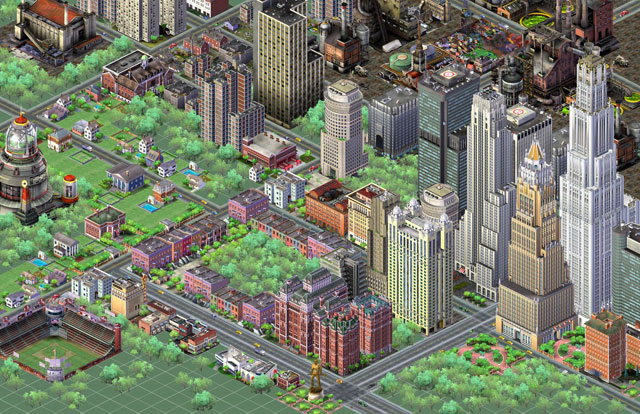
For example, when playing Cities: Skylines, students learn about urban planning, transportation systems, taxation, and environmental management. They must balance city budgets, design road networks, and maintain public satisfaction. These mechanics mirror real-world challenges faced by city planners and policymakers.
Similarly, Kerbal Space Program introduces players to physics and aerospace engineering concepts. Students design rockets, calculate trajectories, and experiment with orbital mechanics, all within an engaging and interactive environment.
Key Real-World Skills Students Can Learn
1. Critical Thinking and Problem Solving
Simulation games constantly present players with challenges that require thoughtful solutions. Whether managing a city or piloting an aircraft, players must analyze situations and make strategic decisions.
For instance, in Microsoft Flight Simulator, students learn how weather conditions, navigation systems, and aircraft controls interact. Successfully flying a plane requires attention to detail, planning, and problem-solving skills.
These abilities translate directly to academic and professional environments where complex problems require logical solutions.
2. Financial and Resource Management
Many simulation games require players to manage limited resources such as money, energy, or materials.
In The Sims 4, players manage household budgets, career choices, and lifestyle decisions. Students learn to balance spending with saving while planning for long-term goals.
While simplified, these financial mechanics help players develop an early understanding of budgeting, prioritization, and economic decision-making.
3. Strategic Planning and Decision-Making
Simulation games reward long-term planning rather than quick reactions. Students must think several steps ahead when making choices.
City-building games like Cities: Skylines require players to design infrastructure, plan expansion, and anticipate population growth. Poor planning can lead to traffic congestion, pollution, or economic collapse.
This encourages students to evaluate consequences before making decisions—a skill highly valued in both academic and professional settings.
4. STEM Learning Opportunities
Many simulation games incorporate science, technology, engineering, and mathematics concepts. These STEM-related mechanics can make complex subjects more accessible to students.
For example, Kerbal Space Program teaches principles such as gravity, thrust, fuel efficiency, and orbital mechanics. Players learn through experimentation, failure, and improvement.
This trial-and-error learning method mirrors real scientific exploration and helps students understand concepts that might otherwise seem abstract.
5. Creativity and Innovation
Simulation games often provide open-ended environments where players can experiment freely. This encourages creativity and innovation.
Students can design cities, build spacecraft, or create unique storylines for virtual characters. These creative elements stimulate imagination while reinforcing problem-solving abilities.
Games like The Sims 4 allow players to experiment with architecture, interior design, and life planning. Through these activities, students develop design thinking and creative problem-solving skills.
Why Teachers and Schools Are Embracing Game-Based Learning
Game-based learning has become an important trend in modern education. Teachers are increasingly incorporating simulation games into classrooms because they improve engagement and motivation.
Traditional lectures can sometimes feel disconnected from real-life applications. Simulation games, on the other hand, demonstrate how theoretical concepts work in practice.
For example, a geography lesson about city development becomes much more engaging when students experiment with urban design in Cities: Skylines. Similarly, physics lessons become interactive when students launch rockets in Kerbal Space Program.
The interactive nature of simulation games helps students stay focused and invested in the learning process.
Preparing Students for Future Careers
Beyond academic benefits, simulation games also help students explore potential career paths.
Flight simulation games introduce players to aviation and aerospace industries. City-building games expose them to urban planning, civil engineering, and public policy. Life simulation games provide insight into social dynamics and personal development.
These virtual experiences allow students to experiment with different roles and responsibilities without real-world risks. As a result, they can discover interests and talents that may guide their future educational or career choices.
The Future of Simulation Games in Education
As technology continues to advance, simulation games are becoming even more sophisticated. Improvements in artificial intelligence, virtual reality, and cloud computing are creating more immersive and realistic learning environments.
Future educational simulation games may allow students to:
-
Experience historical events in interactive simulations
-
Practice medical procedures in virtual hospitals
-
Manage sustainable cities using real-world environmental data
-
Explore space missions with realistic physics engines
These innovations could transform how students learn complex subjects and prepare for real-world challenges.